
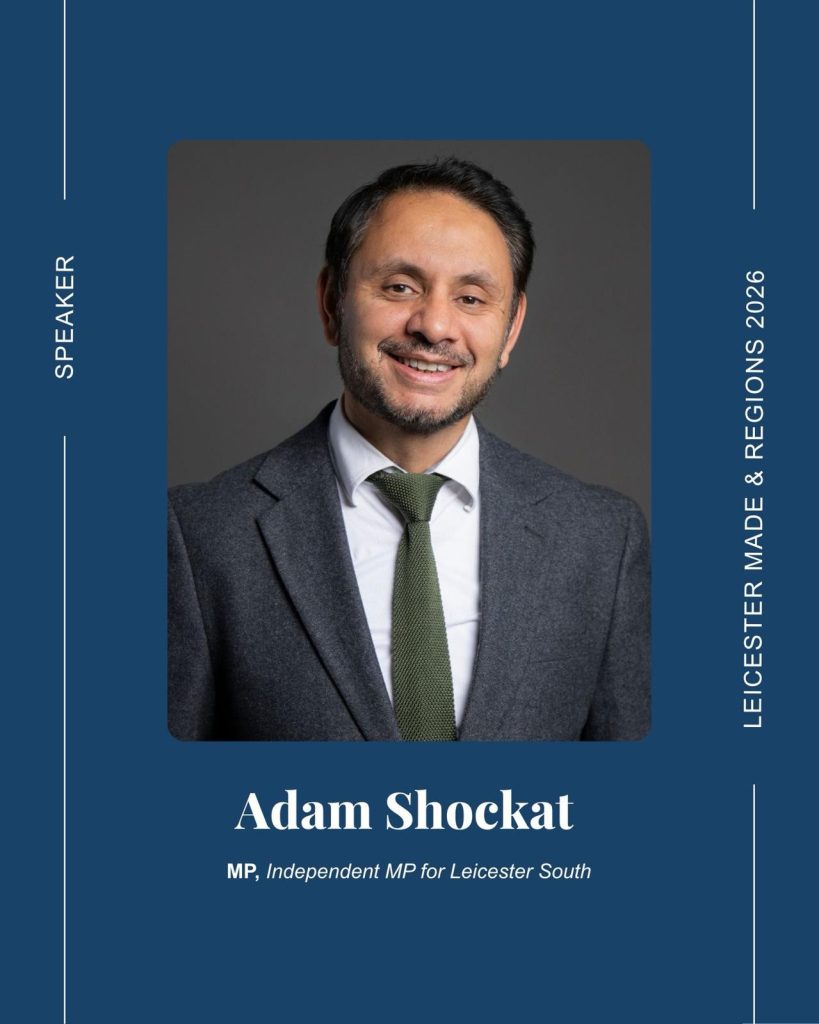
Leicester could help Britain rebuild its textile industry, says Shockat Adam MP
LEICESTER, UK — Shockat Adam MP has called on the Government to make better use of public procurement to support British textile manufacturers, arguing that greater investment in UK-made clothing could create skilled jobs, strengthen national security and help revive Leicester’s historic garment industry.
Speaking in Parliament, the Leicester South MP highlighted the city’s manufacturing heritage and the capabilities that remain within its garment sector. He urged ministers to consider how contracts for military uniforms, NHS clothing and other textiles could be used to support domestic production rather than relying heavily on overseas suppliers.
His proposals include prioritising British manufacturing wherever possible, introducing fairer purchasing practices across the fashion supply chain, investing in skills and apprenticeships, and supporting more sustainable production.
Adam’s central argument is that Leicester’s manufacturers do not need charity. They need fair opportunities to compete for contracts, responsible sourcing practices and a clearer commitment from the Government to British industry.
Leicester’s textile industry still has the skills and capacity
Leicester’s garment industry has deep historical roots, from hosiery production in the Tudor period to the expansion of industrial manufacturing during the 19th century.
In his parliamentary speech, Adam recalled how the industry once supported thousands of businesses and workers, helping families build wealth and contributing to the wider life of the city through community organisations, charities and places of worship.
He argued that this manufacturing heritage should not be viewed simply as a matter of nostalgia. According to figures cited in his speech, the garment sector across Leicestershire continues to support approximately 11,000 jobs.
He also highlighted Leicester’s ability to deliver end-to-end garment production, from design and development through to finished clothing.
Despite these capabilities, Adam noted that garment manufacturing accounts for approximately £375 million of the UK textiles sector’s £25.6 billion value, representing less than 2%.
He questioned why significant public spending on clothing and textiles was not doing more to sustain British manufacturing.
“Leicester once clothed the world,” Adam said, arguing that with the right policy direction, the city could help clothe Britain again.
Public procurement could create opportunities for British manufacturers
A major focus of Adam’s parliamentary contributions was the potential for public sector contracts to provide more consistent demand for UK-made textiles.
He cited an annual British Army clothing budget of nearly £80 million. Figures referenced in the debate, dating from 2013, indicated that just 6% of military clothing was manufactured in Britain at that time.
Adam also highlighted NHS uniform frameworks worth £125 million over five years, alongside the substantial public expenditure on personal protective equipment during the COVID-19 pandemic.
He argued that the pandemic demonstrated how quickly UK factories could adapt production to meet urgent demand for PPE and medical scrubs.
For Adam, this experience illustrates why retaining domestic manufacturing capacity matters. British factories can offer flexibility, technical expertise and the ability to respond to emergencies, provided they have the investment and orders needed to maintain those capabilities.
He called on the Government to consider manufacturing military uniforms and NHS clothing in Britain wherever possible.
The issue also has implications for national security. Adam questioned the decision to award defence-related clothing contracts to overseas manufacturers, including those in China, arguing that dependence on foreign supply chains could create strategic vulnerabilities.
In a separate parliamentary contribution, he referred to £37 million worth of military equipment contracted to foreign factories and £23 million worth of NHS PPE manufactured abroad, using these figures to challenge ministers on the case for bringing more textile procurement back to the UK.
His message was clear: public procurement should be treated as a strategic tool for supporting British industry, strengthening supply chains and maintaining essential domestic production skills.
Ethical supply chains require fair purchasing practices
Adam also addressed the importance of improving working conditions and tackling exploitation within the garment industry.
He acknowledged that Leicester’s sector has faced damaging allegations and said exploitative practices must be addressed. Referring to the Operation Tacit review, he argued that the scale of the industry’s problems had sometimes been portrayed unfairly and that responsible manufacturers should not be stigmatised.
However, he stressed that ethical manufacturing depends on more than enforcement at factory level. The purchasing practices of major brands and retailers also play a crucial role.
Research presented at an event on fair work and UK garment supply chains was cited in his speech. According to the figures presented, all surveyed suppliers paid for audits, but only 6% were guaranteed future orders.
Adam also highlighted concerns about shortened production lead times, sudden changes to orders, extended payment terms and cancelled contracts. The research indicated that 67% of manufacturers reported that brands refused to cover the costs of changes made during production.
Such practices can place considerable financial pressure on factories, potentially undermining the stability of both businesses and their workforces.
To address these issues, Adam backed proposals for a garment trading adjudicator, modelled on the Groceries Code Adjudicator. A dedicated body could help address unfair purchasing practices and encourage greater accountability between brands and manufacturers.
The proposal reflects a wider argument: businesses cannot be expected to maintain ethical standards and stable employment if the commercial terms imposed on them make sustainable production increasingly difficult.
Creating jobs and opening pathways into employment
The potential social benefits of a stronger textile industry were another important theme in Adam’s speech.
Garment manufacturing can offer flexible employment opportunities, particularly for women returning to work after having children and people who may face barriers to entering the labour market.
Adam highlighted his visit to Fashion Enter’s Leicester hub, where he met trainees alongside Jenny Holloway and saw efforts to develop skills in ethical garment production.
He also recognised the work of community organisations, including Wesley Hall and Shama Women’s Centre, which provide sewing classes that can help disadvantaged women develop practical skills and improve their employment prospects.
In a separate parliamentary contribution, Adam raised concerns about women of Bangladeshi origin in his constituency who were struggling to find work following the decline of Leicester’s textile industry.
He described the additional difficulties faced by women for whom English is not a first language, particularly when they are required to provide written evidence of job applications and interviews to the Department for Work and Pensions.
He called for greater empathy within the employment support system, arguing that administrative requirements and the threat of benefit sanctions could add to the stress experienced by people already struggling to find work.
The issues underline the wider significance of textile manufacturing for Leicester: rebuilding the sector could support not only businesses, but also local employment, skills development and economic inclusion.
Sustainability offers another reason to manufacture closer to home
Adam argued that expanding British textile production could also contribute to environmental objectives.
Manufacturing closer to the end market can reduce transport-related emissions and give businesses and purchasers greater oversight of production processes and environmental standards.
He highlighted Leicester-based innovators, including Nanofique and Shibori dye house, working alongside De Montfort University on wastewater treatment and more sustainable textile processes.
He also called for action to address the volume of clothing produced to reduce unit costs, only for unsold stock to remain in warehouses or become waste.
His proposals included introducing stronger penalties for excessive unsold production and offering tax incentives to UK manufacturers that turn textile waste and deadstock into new garments.
Adam argued that these measures could help tackle the growing challenge of fashion waste while creating new commercial opportunities for British manufacturers.
Rather than treating sustainability and industrial growth as competing priorities, he suggested that investment in textile innovation could allow the UK to develop a more competitive and environmentally responsible manufacturing sector.
A national strategy to support UK textile manufacturing
Adam’s proposals extend beyond individual contracts to the wider structure of the British garment industry.
He called for a national body to represent manufacturers, a national director for the sector and the development of regional manufacturing clusters that bring together businesses, skills and supply chains.
He also highlighted the need for vocational training and apprenticeships aligned with local industry, alongside concerns about infrastructure and transport investment in the East Midlands.
Consumer awareness was another part of his vision. Adam proposed a clearer “Made in the UK” trademark, with stricter requirements to ensure that products carrying the label are genuinely manufactured in Britain.
He argued that consumers who want to support domestic businesses need reliable information about where their clothes are made. Clearer labelling could help people make informed purchasing decisions and encourage more spending to remain within local economies.
He also highlighted Leicester Made’s Leicester Textiles Renewal project as an example of work to strengthen supply chains, promote regional expertise and accelerate sustainable, technology-driven domestic production.
Together, these proposals aim to create the conditions in which British manufacturers can compete more effectively and secure the investment needed to grow.
The case for putting British textiles back on the agenda
Adam concluded that increasing the share of clothing manufactured in Britain could have significant economic benefits. He argued that raising the proportion of UK-manufactured clothing sold domestically to just 10% would create thousands of skilled jobs, rebuild industrial capacity and generate additional revenue for the Treasury.
The proposals now place the focus on the Government’s approach to procurement, particularly across defence and NHS supply chains.
For Leicester, the stakes are considerable. The city retains manufacturing expertise, established businesses and a workforce with skills that could support a stronger domestic garment industry.
Adam’s argument is that these resources should be recognised as an economic and strategic asset rather than allowed to decline through a lack of demand.
From British-made uniforms and NHS textiles to ethical purchasing, sustainable production and skills development, his parliamentary contributions set out a vision for how public policy could help revive the sector.
The challenge for ministers is to turn that case into practical action.
For a city that once helped clothe the world, greater support for textile procurement could offer a route towards renewed manufacturing, stronger local supply chains and more opportunities for Leicester’s workers and businesses.