
The Apparel & Textile Manufacturers Federation (ATMF) is leading a major industry-wide project to strengthen UK garment and textile manufacturing, improve access to public procurement contracts and create new opportunities for small and medium-sized manufacturers.
Over the past 18 months, a consortium of industry partners has worked on the Garment & Textile Workers Trust (GTWT) programme, entitled ‘Unifying the Voice for Public Procurement Contracts in the UK’. The project report is due to be released at Manchester Made & Regions in November 2026, at a time when UK manufacturing, supply chain resilience and the role of SMEs in public procurement are increasingly important.
Bringing UK manufacturers together
Led by ATMF, the consortium includes De Montfort University (DMU), with Carolyn Hardaker; Fashion-Enter Ltd (FEL), with support from Beth Davy-Day, TJ Hussein, Callum Holloway, Claire Solly, Divya Kama and Jo Bean; SP&KO Consultancy’s Katherine O’Driscoll; and Alix Coombs, representing Fashion Roundtable.
The project initially began in Leicester under the name ‘Leicester Forward’. However, it quickly became clear that the challenges and opportunities facing the sector extended far beyond one city, leading to the development of a nationwide programme.
A key part of the project has been the creation of Factories We Trust, an industry-focused website designed to help buyers and public procurement officers identify quality UK manufacturers and assess their technical capabilities and ethical standards.
The aim is to make it easier for public sector buyers to find trusted UK suppliers while helping domestic factories access opportunities that may otherwise be difficult for smaller businesses to secure.
Making public procurement work for SMEs
One of the biggest challenges facing smaller manufacturers is not simply having the skills and capacity to produce garments and textiles, but having a practical route into large public sector contracts.
To address this, ATMF has brought together a consortium of more than 20 factories that can work collectively as a bidding mechanism for larger contracts. By combining the capabilities of multiple manufacturers, the consortium aims to help SMEs compete for opportunities that would be difficult to deliver individually.
The economic case for UK production is also a central part of the project. Economist Alix Coombs has examined the multiplier effect of awarding public contracts to UK manufacturers rather than sourcing products overseas, taking into account factors such as import duties and the wider economic benefits of domestic production.
This work comes at a significant time for the sector, with growing calls for reindustrialisation, stronger domestic supply chains and greater opportunities for SMEs through public procurement.
ATMF has confirmed that the consortium has submitted a bid to the Home Office worth £60 million for security clothing items. The consortium is now awaiting further instructions from the Home Office. A bid has also recently been submitted for NHS procurement, representing another important step in opening up public sector opportunities for UK manufacturers.
Industry meeting highlights progress and challenges
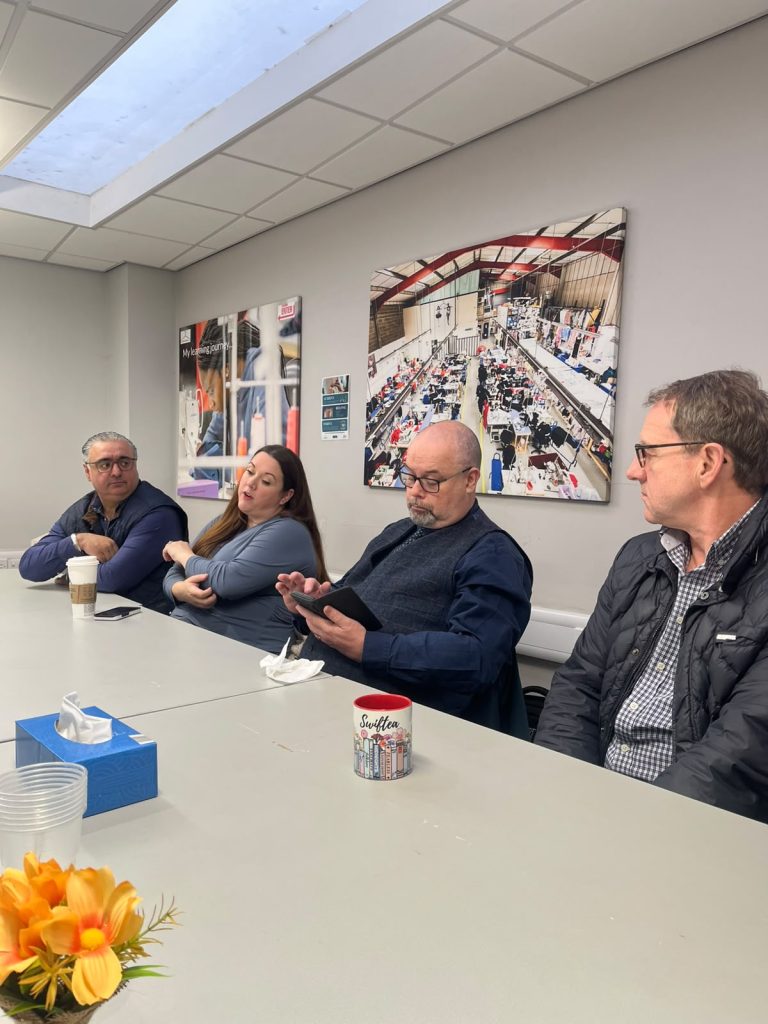
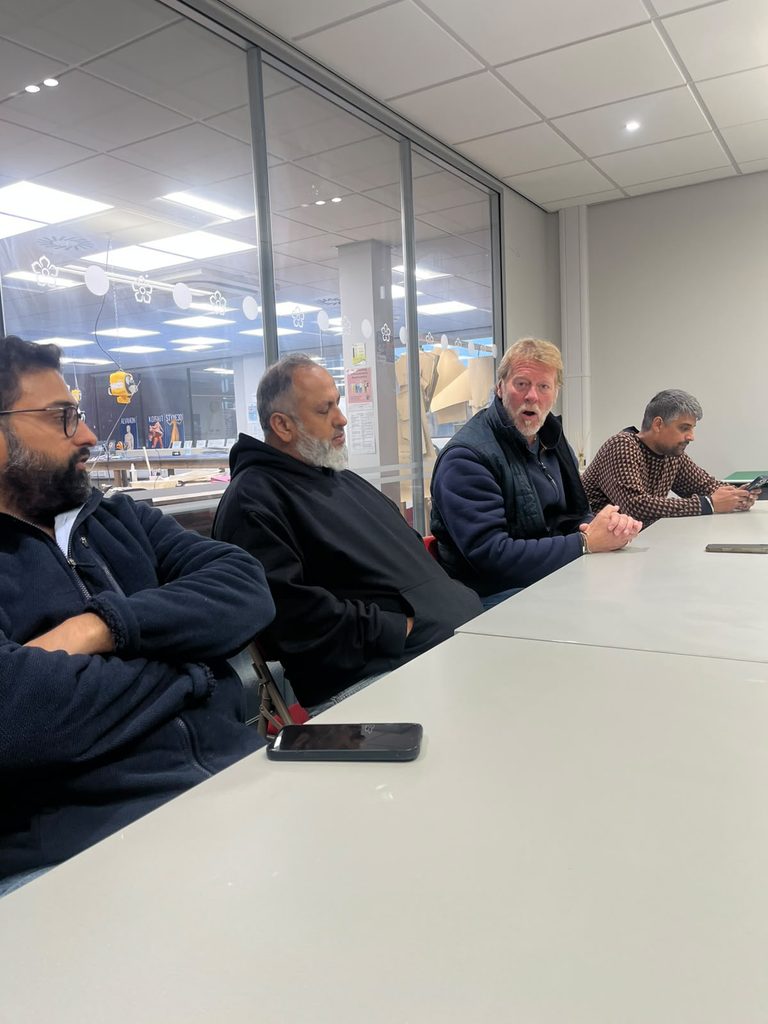
On 20 October 2026, factories involved in the initiative met to discuss progress, share updates and consider the next steps for securing public procurement contracts.
Guest speakers included Suzanne Ellingham, Director at Hyve Group and Source Fashion, and independent consultant Simon Platts.
Discussions covered a number of important developments:
- Westminster engagement: Following a meeting at the Palace of Westminster on 16 September, attended by MPs David Lammy and Shockat Adam, the three requests raised by David Lammy have been submitted, with an update awaited from his office.
- Manchester Made & Regions: An update event is scheduled for 4 November at Manchester Hall, kindly sponsored by Source Fashion.
- Trade body engagement: A meeting for trade bodies took place on 19 October at the Old Admiralty Building in London.
- Future procurement opportunities: The consortium discussed the next steps for public procurement applications, including the recently submitted NHS bid.
- Nexus support: Confirmation was received regarding Nexus’s support for future applications, with thanks extended to Niall.
- Source Fashion, January 2027: Exhibition space is to be made available to factories in Leicester at the January 2027 edition of Source Fashion, providing an opportunity to showcase UK manufacturing capabilities.
- Factories We Trust: Updates and feedback on the website were shared as work continues to improve its value to manufacturers and buyers.
- International supply chains: The meeting also considered developments in China, including Decree 834 and its potential implications for supply chain transparency.
Understanding China’s Decree 834
Further information was requested during the meeting about China’s Decree 834 and its potential implications for businesses operating across international supply chains.
The provisions discussed included restrictions on certain information-gathering activities, monitoring of key sectors and measures that may be taken against foreign entities whose actions are considered disruptive to China’s economic interests.
The potential impact on routine commercial activities, including supply chain mapping, audits, requests for bills of materials and product-origin tracing, was of particular interest.
These issues underline the importance of understanding the regulatory environment in which international suppliers operate, particularly for businesses seeking greater transparency and traceability throughout their supply chains.
Urgent need for action
A key message from the factories at the October meeting was the growing pressure on UK manufacturers caused by a lack of orders.
Attendees expressed frustration at the slow pace of decision-making and the time it takes for public procurement opportunities to progress. For businesses operating in a challenging commercial environment, securing contracts is essential to maintaining production, protecting jobs and supporting the future of UK manufacturing.
While the consortium has made progress in bringing factories together and submitting bids, the priority now is to turn these opportunities into tangible contracts.
The project seeks to demonstrate that UK manufacturers can deliver quality products, meet demanding technical and ethical requirements, and work collaboratively to fulfil larger orders. The challenge is ensuring that public procurement processes provide SMEs with a realistic opportunity to compete.
Looking ahead
With the GTWT report due for release at Manchester Made & Regions in November 2026, the project is entering an important stage.
Through its work with manufacturers, academic partners, consultants and industry organisations, ATMF is continuing to push for a more accessible and effective route into public procurement for UK garment and textile businesses.
The next consortium meeting is scheduled for the end of November 2026, when members will review progress and consider the next steps.
For the sector, the message is clear: UK factories have the skills, expertise and collective capability to deliver. The priority is to ensure that public procurement opportunities translate into real orders, supporting British manufacturing, strengthening supply chains and securing the future of the industry.