
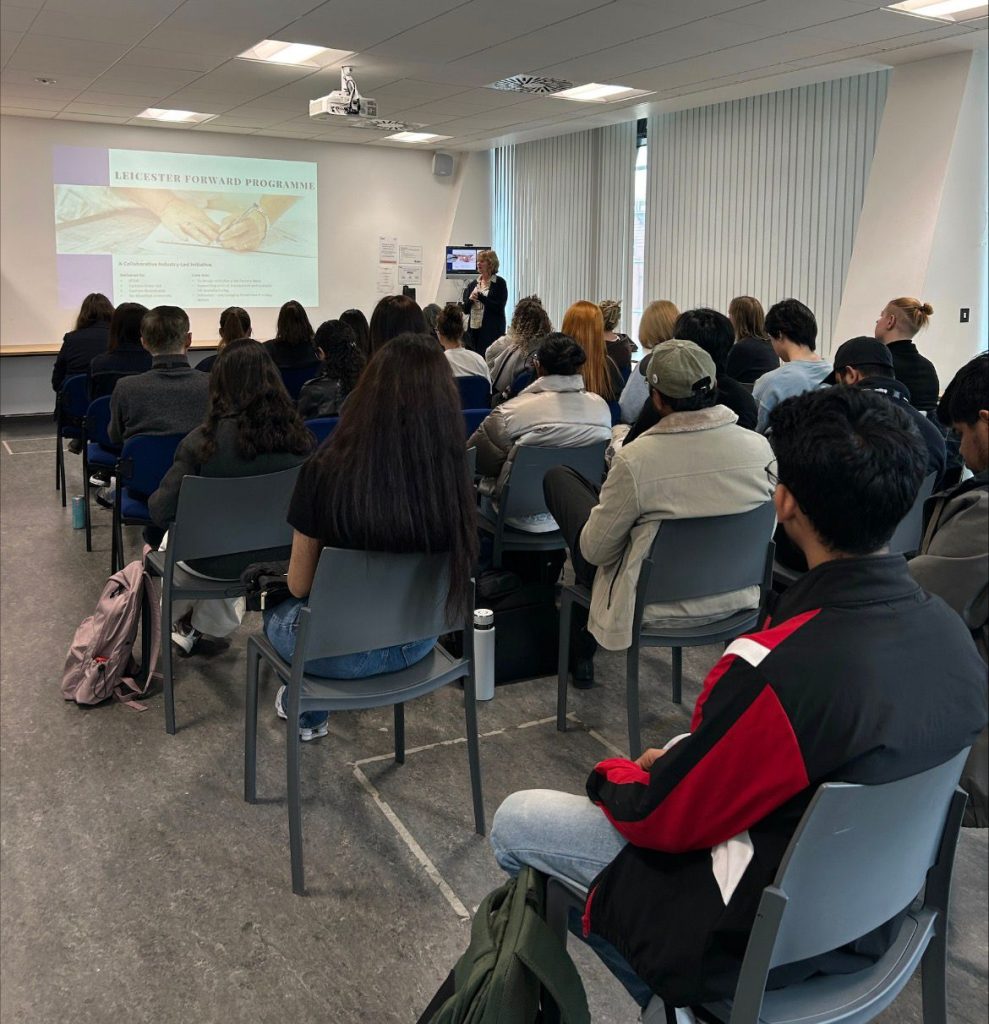
De Montfort University (DMU) hosted an engaging and proactive industry session on 12th May 2026 as part of the Garment & Textile Workers Trust programme, focusing on the development of a new website to support trust and transparency within garment manufacturing factories and fashion supply chains.
The session formed part of a wider research initiative led by the Apparel & Textile Manufacturers Federation consortium, which includes Fashion Roundtable, De Montfort University, and Fashion-Enter Ltd / FashionCapital, with additional support from Katherine O’Driscoll and Simon Platts.
The project aims to explore the fashion and textile sector’s growing need for greater transparency across supply chains, particularly around ethical sourcing, sustainability, auditing processes, and worker representation.
The workshop was organised by Carolyn Hardaker and attracted a strong cross-section of students studying fashion buying, fashion management, and digital design. Jennifer Holloway chaired the session and delivered a presentation outlining the objectives of the research project and the importance of building trusted and transparent systems for manufacturers, brands, buyers, and consumers.
A key part of the session focused on an anonymous survey, approved by DMU’s Ethics Department, which explored the factors influencing sourcing decisions and buyer purchasing behaviours within the fashion industry.
Discussions throughout the session covered a range of critical industry topics including sustainability and circularity, factory audits and accreditations, the proposed Fair Work Agency, and trade union involvement, with contributions from Dominic Armstrong.
The survey findings will contribute to the wider research project already undertaken and completed by Claire Lerpiniere and Carolyn Hardaker, reviewing both nationally and internationally recognised transparency websites, accreditation systems, and kite marks used across the sector.
The highly interactive session concluded with QR codes distributed to attendees, enabling further anonymous feedback and participation in the ongoing research.
The consortium now looks forward to analysing the collected data and continuing to develop recommendations that support greater trust, transparency, and accountability within UK garment manufacturing and global fashion supply chains.
Special thanks were extended to De Montfort University and all participating students and contributors for their support and engagement throughout the session.