
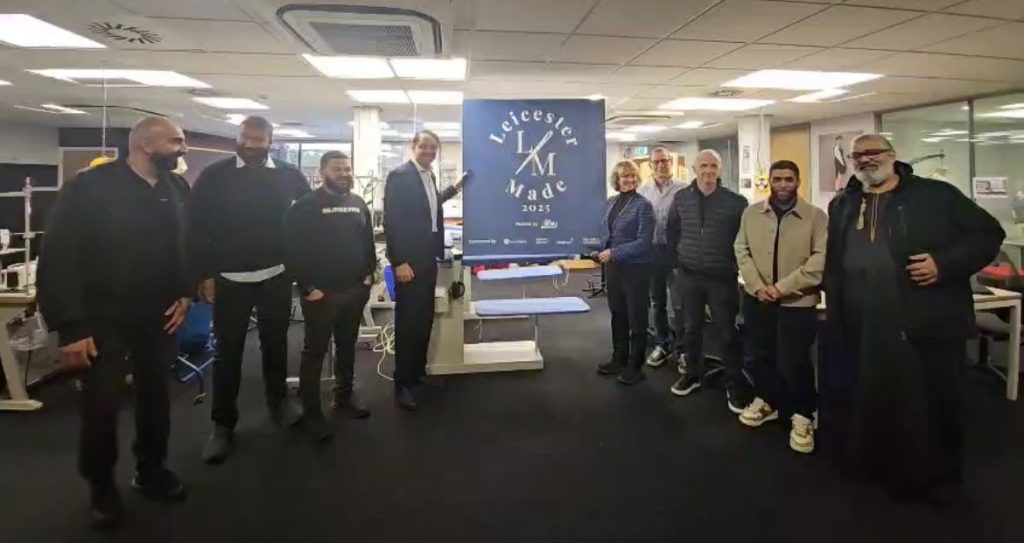
Leicester’s garment manufacturers came together yesterday in a powerful show of unity, speaking with one voice as they met with Shockat Adam MP to discuss public-sector procurement and future opportunities for UK-made apparel.
The discussion marks a significant step forward in aligning government, education, and industry around a shared objective: reviving British manufacturing through skills, fair procurement, and local supply chains.
A Productive Dialogue With Government
Manufacturers expressed appreciation for speaking with an MP who truly understands the sector and demonstrates a genuine commitment to improving outcomes for workers and businesses in Leicester.
Building on the 17 key asks from the Leicester Made in May ’25 report, Shockat Adam confirmed his support for further parliamentary debate on widening public procurement opportunities for UK-made textiles.
This momentum reflects a growing recognition within government of the value domestic manufacturing brings to the UK economy — from economic resilience to job creation and sustainability.
“This is a major step forward,” noted Catherine West MP, who has also been championing procurement reform.
Opening Doors for Skills & Opportunity
Shockat Adam also spent time with graduates who have recently completed Level 1–3 training in stitching skills. Hearing firsthand how training connects to employment sparked strong motivation among learners.
One learner expressed:
“Well he seems to know what he’s doing. I want to work. If the factories get contracts for PPE by Government then I’ll get a job!”
This sentiment captures the core mission of ATMF:
to build a skills-to-employment pipeline that delivers real opportunity for Leicester’s textile workforce.
Why Public Procurement Matters
A key message from the session was simple:
To understand the true value of UK-made goods, we must look beyond the unit price.
Reframing procurement to include:
- Job creation
- Skills development
- Ethical standards
- Environmental impact
- Local economic value
…would allow British factories to compete fairly against overseas suppliers.
Reviewing the full economic impact of UK-made PPE, uniforms, and other public-sector garments is essential. Doing so would enable taxpayers’ money to stay within the UK, support communities, and ensure transparent, ethical production.
Next Steps
The ATMF will continue:
- Advocating for equitable procurement reforms
- Supporting manufacturers to meet compliance requirements
- Strengthening the training-to-employment pipeline
- Building constructive relationships with policymakers
Yesterday’s meeting reflects how collaboration — across factories, workers, and government — is the key to rebuilding the UK’s apparel and textile future.
Unity is progress — and progress is happening.
ATMF extends its thanks to all who attended and contributed to the conversation.