
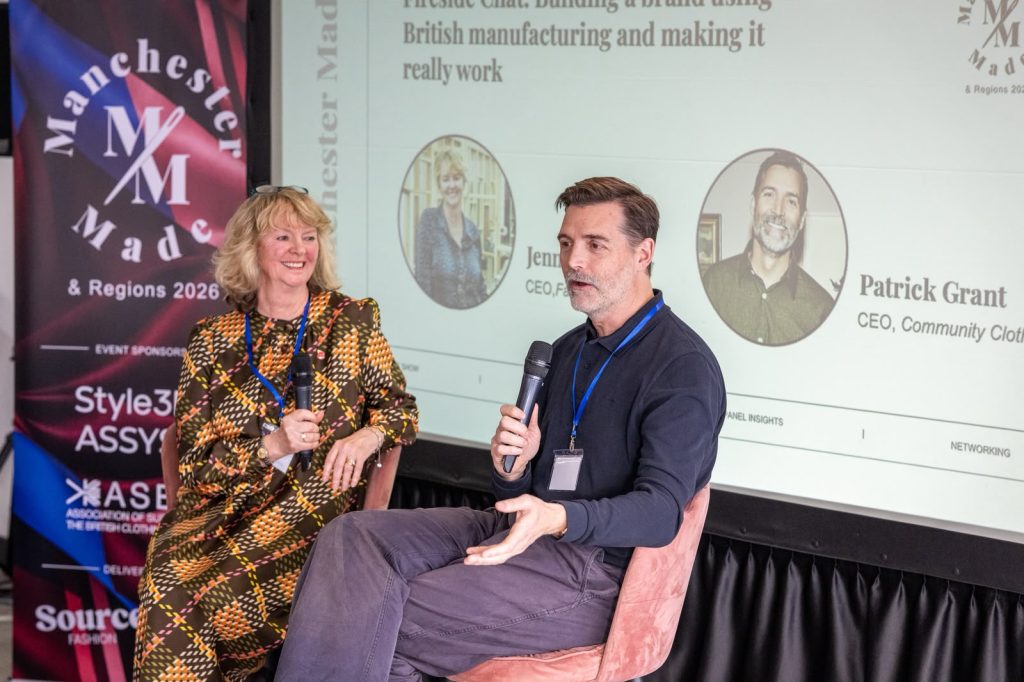
Manchester Made! has exceeded expectations, bringing together UK manufacturers, fashion brands, retailers and industry leaders for a hugely successful event focused on the future of British manufacturing.
With more quality buyers in attendance than at any previous event, the day generated valuable connections, potential new orders and exciting business opportunities for factories across the UK.
The message was clear: UK manufacturing has a significant role to play in the future of the fashion and textile industry, and the appetite for sourcing closer to home is growing.
Public procurement could unlock a new era for UK manufacturing
The event opened with a video message from Kevin McKeever, who is currently working in the USA. In his contribution, Kevin reiterated the three asks put forward to the UK Labour Party, centred on using public procurement orders to support British manufacturing.
The discussion highlighted the potential for government procurement to provide meaningful opportunities for UK factories.
There was a strong sense of optimism that manufacturing contracts could be awarded to British factories, with the remaining challenge being to establish the right mechanisms to make this happen.
Debenhams Group demonstrates the power of UK manufacturing
One of the event’s standout discussions focused on the success of Debenhams Group, which reportedly turned an £18 million loss into a pre-tax profit of £28.2 million at the end of August 2026.
Could its success be linked, at least in part, to the strength of its UK manufacturing partnerships and best-selling products from its network of 22 UK-based factories?
Sophie Rycroft was recognised for her contribution, and the event also provided a welcome opportunity to reconnect with Nikki Tattersall.
The discussion reinforced the commercial value of strong relationships between retailers, brands and domestic manufacturers.
Patrick Grant makes the case for scaling up British manufacturing
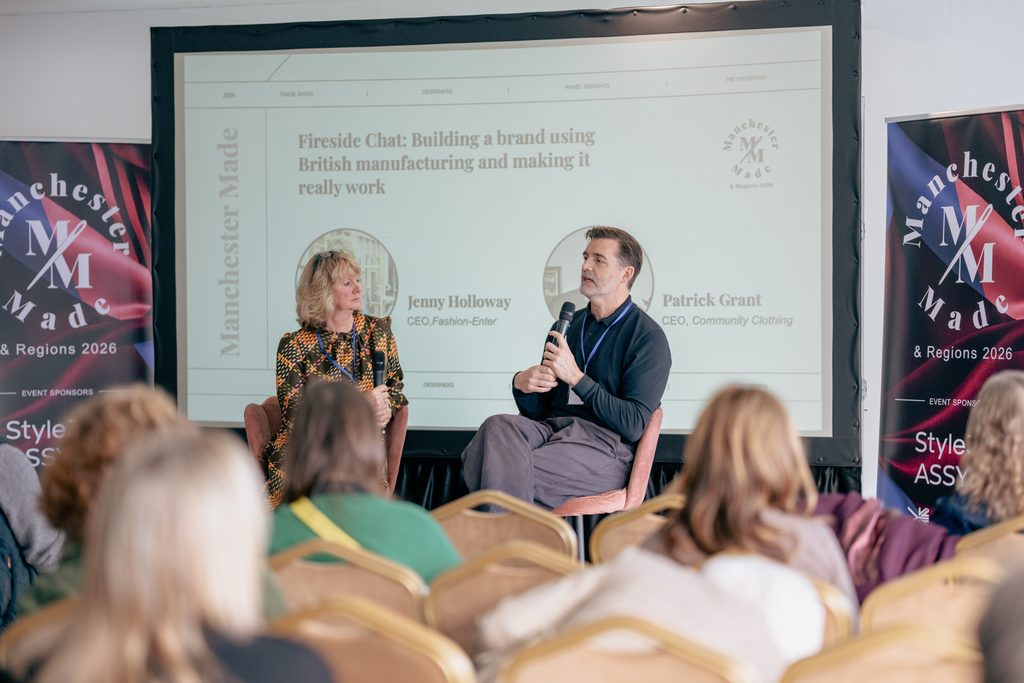
Patrick Grant delivered a passionate contribution, highlighting the potential of British manufacturing through his successful Community Clothing business and its network of 59 partner factories across the UK.
His message challenged the perception that UK manufacturing is simply too expensive.
He explained:
“Everybody always says that the UK is an expensive place to manufacture. And right now, with the industry as it is, it is expensive, but it’s good. But if it were twice the size or three times the size, it would get a lot less expensive because the efficiencies in those factories, both operating efficiencies and overhead efficiencies, would start to come down dramatically.”
The argument was compelling: increasing the scale of UK manufacturing could create efficiencies, reduce overheads and make domestic production increasingly competitive.
Rather than accepting the current limitations, the industry needs to invest in growth, collaboration and greater production capacity.
New business opportunities already emerging for exhibitors
Perhaps one of the most exciting outcomes of Manchester Made! was the interest generated among buyers.
One online retailer has already expressed an interest in meeting participating factories privately in Leicester to explore new business opportunities.
This is precisely what the event set out to achieve: bringing manufacturers and buyers together, creating meaningful conversations and turning introductions into commercial relationships.
The feedback from exhibitors and attendees spoke volumes:
“I’ve met more buyers today than in the last five years!”
“This is the best event yet – love the venue, the speakers have been excellent and this morning was rammed!”
“I’ve met old buyers that I lost touch with and have a meeting with her next week.”
“This event has had a lot of fresh blood. Our stand has been continuously busy all day! Really glad we sponsored.”
For factories, taking time away from production is never easy. However, the response demonstrated just how valuable it is for the industry to come together, showcase its capabilities and build new relationships.
Bringing the UK fashion and textile industry together
Manchester Made! welcomed an impressive line-up of speakers and industry contributors, covering manufacturing, fashion, textiles, sustainability, technology, education and the future of UK sourcing.
A huge thank you goes to:
- Snahal Patel
- Professor Jess Power PFHEA NTF CText FTI FCMI
- Nicholas Betts of ZERØTEC
- Gemma Gratton
- Michael Conway
- Simon C.
- Simon Platts
- James Olley
- Marguerite Le Rolland
- Jack Stratten
- Holly Morris
- Rachel Douglass
- Isatou Ndure
- Alix Coombs
- Claire Lerpiniere
- Scott Wheeler of Hyper Hyper
Special recognition goes to Claire Lerpiniere for her impromptu speech, which was enthusiastically received.
A particular thank you also goes to the event’s supporters and organisers, especially Suzanne Ellingham and Source Fashion. Their commitment and genuine support for UK manufacturing helped make the event possible.
The exhibitors also deserve enormous credit. Leaving the factory floor to attend an industry event takes time and commitment, but Manchester Made! demonstrated the importance of standing together and showing the strength, diversity and capabilities of British manufacturing.
A united industry with a stronger voice
The event was supported by a range of important industry organisations and individuals, including:
- ASBCI (Association of Suppliers to the British Clothing Industry)
- Style3D
- The Textiles Institute
- Garment & Textile Workers Trust
- UK Fashion & Textile Association (UKFT)
- David Lammy
- Shockat Adam MP
- Rosie Wrighting MP
- Peter Chandler
- Stephanie Dick
- Andrea Wilson
- Catherine West MP
- Sian Eiles
Their involvement reinforced the importance of collaboration between manufacturers, industry bodies, policymakers and the wider fashion supply chain.
Scotland is next!
Manchester Made! has demonstrated that there is real appetite for bringing UK manufacturers and buyers together.
The event delivered meaningful conversations, strong buyer engagement and, most importantly, the potential for new commercial relationships that could help secure the future of British manufacturing.
The challenge now is to turn that momentum into orders, investment and long-term commitments to UK production.
With factories ready to deliver, buyers looking for new opportunities and growing recognition of the value of domestic manufacturing, the future looks promising.
A huge well done to Beth Davy-Day and everyone involved in making Manchester Made! such a success.
Manchester has made its mark. Now it’s Scotland’s turn!