
UK Budget 2026: Key Changes and What They Mean for Businesses
The 2026 UK Budget has introduced a range of measures aimed at supporting households, protecting businesses and maintaining economic stability amid continued uncertainty in the global economy. While the Chancellor has avoided broad increases to headline tax rates, changes to business rates, energy support, taxation and regional funding will have implications for organisations across the country.
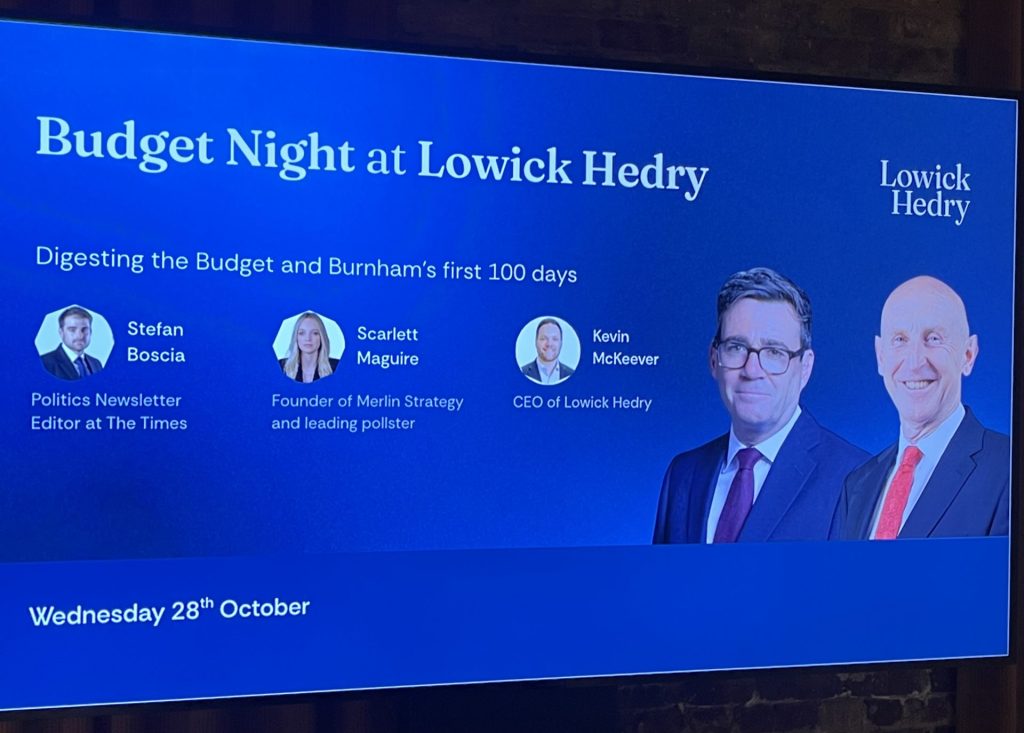
Presented by Chancellor John Healey on 28 October 2026, the Budget sets out the Government’s approach to managing economic pressures while encouraging investment, supporting high streets and strengthening regional economic development.
For businesses, understanding these announcements will be important when planning for the months and years ahead. Here is an overview of the key measures and what they could mean for the UK business community.
Economic Outlook: Balancing Stability and Growth
The Budget comes at a time of considerable economic uncertainty, with higher energy costs, inflationary pressures and international instability continuing to influence the UK economy.
The Government has maintained its commitment to meeting its fiscal rules, with the Office for Budget Responsibility (OBR) confirming that the stability rule is met by £15 billion in 2029-30.
However, the economic outlook remains challenging. The OBR forecasts UK economic growth of 1.2% in 2026, slowing to 1% in 2027 before recovering in subsequent years.
The Government’s approach is to provide short-term support for households and businesses while maintaining longer-term investment in infrastructure, energy security and economic development.
For businesses, this creates an environment in which careful financial planning, investment decisions and awareness of future policy changes remain particularly important.
Business Taxation: What Has Changed?
One of the notable features of the 2026 Budget is that several major headline tax rates remain unchanged. Income tax, National Insurance contributions, VAT, corporation tax and capital gains tax rates have not been increased as part of the main Budget measures.
However, a number of targeted tax changes will affect specific sectors and sources of income.
These include:
- An increase in the Bank Corporation Tax Surcharge from 3% to 6% for a temporary 15-month period, beginning in January 2027.
- Changes requiring online marketplaces to collect VAT on behalf of businesses with significant online sales.
- Increases to gambling duties on higher-risk machine games.
- Changes to the taxation of savings and property income.
- A reduction in Business Asset Disposal Relief to £500,000.
Although the Government has avoided widespread increases to headline tax rates, businesses should assess whether the more targeted measures will affect their operating costs, investment plans or tax liabilities.
Companies operating in financial services, online retail, property and other affected sectors may need to review their financial planning ahead of the changes taking effect.
Business Rates and Support for High Streets
Business rates remain a significant operating cost for many organisations, particularly those in retail, hospitality and leisure.
The Budget includes a package of measures intended to reduce pressure on these sectors.
Around 70,000 additional retail, hospitality and leisure properties in England are expected to be taken out of business rates through changes to Small Business Rates Relief.
The Government has also announced a two-year real-terms freeze in business rates bills for properties in these sectors.
Taken together, the measures mean that retail, hospitality and leisure properties in England will benefit from rates being frozen in real terms, reduced or brought down to zero.
For smaller independent businesses, including shops, cafés, pubs and restaurants, these changes could provide additional financial flexibility.
However, the overall benefit will depend on individual property circumstances and eligibility.
Businesses should review their current business rates position to understand whether they qualify for additional relief.
Energy Costs and Support for Households
Energy costs continue to be an important consideration for businesses and consumers.
The Budget includes measures designed to reduce pressure on household energy bills, including a £2.6 billion Household Energy Payment programme.
Under the scheme, eligible households in England in council tax bands A to D will receive a £100 payment from January 2027. The programme is expected to support up to 20 million households, with devolved administrations receiving funding through the Barnett formula.
The Government is also extending the VAT reduction on electricity until July 2027.
In addition, the existing 5p fuel duty reduction and freeze will continue until July 2027, alongside an extension of the Heavy Goods Vehicle road tax holiday.
While much of this support is directed towards households and transport costs, businesses may benefit indirectly through reduced pressure on consumer spending and certain operating expenses.
For companies in logistics, transport and distribution, fuel duty arrangements will remain particularly relevant.
Late Payments and Cash Flow for Smaller Businesses
Late payments remain a significant concern for small businesses and independent suppliers.
Long payment terms can create considerable pressure on cash flow, making it difficult for smaller organisations to pay staff, suppliers and other operating expenses on time.
The proposed reforms outlined alongside the Budget include stronger requirements around payment terms and interest on overdue invoices.
A proposed 60-day cap on payment terms and mandatory interest on late payments would represent an important development for smaller suppliers dealing with larger customers.
Improving payment practices could help businesses manage cash flow more effectively and reduce the financial uncertainty associated with overdue invoices.
For small and medium-sized enterprises (SMEs), the practical implementation and enforcement of these changes will be particularly important.
Regional Devolution: Greater Opportunities Outside Westminster
Regional devolution is another important part of the Government’s economic strategy.
The Budget continues the move towards giving local and regional leaders greater responsibility for economic development and investment.
The Government intends to increase the proportion of business rates revenue retained locally, with mayors expected to receive a share of business rates from 2027. The longer-term ambition is for local and regional government to retain 100% of business rates income before the end of the decade.
Additional funding is also being directed towards areas transitioning towards devolution agreements and Strategic Authority status.
For businesses, these developments could change how decisions about local investment, infrastructure, regeneration and economic growth are made.
Regional mayors and local authorities are likely to become increasingly important stakeholders for organisations looking to influence planning decisions, secure investment or participate in local development programmes.
Businesses should therefore consider whether their public affairs and stakeholder engagement strategies adequately reflect the growing influence of regional government.
Building relationships with local decision-makers could become increasingly important alongside engagement with central Government departments.
Innovation, Technology and Government Investment
Supporting innovation and encouraging investment remain important elements of the Government’s economic agenda.
The Budget builds on existing initiatives intended to strengthen the UK’s position in strategically important industries, including artificial intelligence, advanced technology and manufacturing.
Government procurement programmes and innovation funding can provide opportunities for businesses developing products, services and technologies that support public sector priorities.
Areas of particular interest include:
- Artificial intelligence and advanced computing.
- Semiconductor and chip manufacturing.
- Research and development.
- Advanced manufacturing.
- Energy security and infrastructure.
- Technology supporting public services.
Businesses operating in these sectors should monitor funding announcements, procurement opportunities and forthcoming policy developments.
Understanding how government purchasing decisions are made, and identifying the departments and organisations responsible for relevant programmes, can help companies prepare for potential opportunities.
Defence Spending and Future Public Investment
Defence spending remains an important part of the wider economic and political debate.
The Government has previously set out ambitions to increase defence spending as a proportion of GDP, with further decisions around funding and implementation expected through future spending plans.
The challenge will be balancing defence commitments with other pressures on public finances, including healthcare, infrastructure, welfare and public services.
For businesses operating in defence, aerospace, engineering, manufacturing and technology, future spending decisions could influence investment and procurement opportunities.
The forthcoming Spending Review will therefore be an important milestone in understanding the Government’s longer-term priorities.
Public Reaction and Business Confidence
The success of a Budget is not measured solely by its impact on public finances. Public confidence and the perception of fairness are also important considerations.
Polling conducted following the Budget by Merlin Strategy, as reported in the original analysis, suggested that public reaction was mixed.
Although the £100 energy payment attracted attention, concerns about the cost of living remained prominent. The findings also suggested that many respondents believed the Budget had increased taxes, despite the main headline tax rates remaining unchanged.
The research highlighted a broader challenge for the Government: demonstrating that its economic policies will translate into tangible improvements for households and businesses.
For companies, consumer confidence is an important consideration. Changes in household spending, inflation and economic expectations can all influence demand for goods and services.
The Government’s ability to demonstrate progress on living standards and economic growth will therefore remain relevant to the wider business environment.
What Happens Next? The Spending Review and Government Policy
The Budget is only one part of the Government’s wider economic programme.
The forthcoming 10-Year Plan and Spending Review will provide further detail on how public funding and investment priorities will develop.
These announcements are likely to be particularly important for businesses seeking to understand future opportunities in infrastructure, technology, defence, regional development and public sector procurement.
Organisations with an interest in influencing policy should pay attention to the development of these plans, including opportunities to contribute to consultations and engage with relevant Government departments.
The growing role of regional authorities also means that businesses may need to broaden their engagement beyond Westminster.
The US Midterm Elections and Their Potential Implications for UK Businesses
Alongside domestic economic policy, developments in the United States could have implications for the UK’s international business environment.
The November 2026 US midterm elections will determine the composition of Congress and influence the political environment in which the Trump Administration pursues its legislative agenda.
Congressional control can affect debates around international trade, tariffs, defence cooperation and economic policy.
For UK businesses with interests in the United States, changes in the political balance could influence the wider policy environment in which transatlantic trade and investment take place.
The UK Government will also be monitoring developments closely, particularly in relation to trade negotiations, international security and defence commitments.
While the precise implications will depend on the election results and subsequent policy decisions, the US political landscape remains an important consideration for organisations with international operations or supply chains.
Conclusion: Understanding the Changing Policy Landscape
The 2026 Budget introduces a combination of business support, targeted tax changes and longer-term investment commitments.
For some businesses, changes to business rates and energy-related measures could provide welcome financial support. Others will need to consider the implications of changes to taxation, operating costs and future public spending decisions.
Perhaps one of the most significant longer-term developments is the continued shift towards regional devolution, giving local leaders a greater role in shaping economic development and investment.
Meanwhile, the forthcoming Spending Review, Government’s 10-Year Plan and international political developments will all contribute to shaping the UK’s economic environment.
For businesses of all sizes, staying informed about policy developments and understanding how they may affect commercial decisions will remain essential.